10 facts on the state of global health

WHO…

Collecting and comparing health data from across the globe is a way to describe health problems, identify trends and help decision-makers set priorities.

Studies describe the state of global health by measuring the burden of disease – the loss of health from all causes of illness and deaths worldwide. They detail the leading causes of deaths worldwide and in every region, and provide information on more than 130 diseases and injuries across the world.

More>>>

Diarrhoea kills half a million children globally

“Globally, in 2015, we estimate that diarrhoea was a leading cause of death among all ages (1·31 million deaths, 95% uncertainty interval [95% UI] 1·23 million to 1·39 million), as well as a leading cause of DALYs because of its disproportionate impact on young children (71·59 million DALYs, 66·44 million to 77·21 million). Diarrhoea was a common cause of death among children under 5 years old (499 000 deaths, 95% UI 447 000–558 000). The number of deaths due to diarrhoea decreased by an estimated 20·8% (95% UI 15·4–26·1) from 2005 to 2015. Rotavirus was the leading cause of diarrhoea deaths (199 000, 95% UI 165 000–241 000), followed by Shigella spp (164 300, 85 000–278 700) and Salmonella spp (90 300, 95% UI 34 100–183 100). Among children under 5 years old, the three aetiologies responsible for the most deaths were rotavirus, Cryptosporidium spp, and Shigella spp. Improvements in safe water and sanitation have decreased diarrhoeal DALYs by 13·4%, and reductions in childhood undernutrition have decreased diarrhoeal DALYs by 10·0% between 2005 and 2015.” Study published in the Lancet


More>>>

Precision global health: beyond prevention and control

“As we step into 2017 and look back at the past year, Zika undoubtedly stands out. 2016 saw the rise and fall of the epidemic in the Americas and worldwide spread of cases, until WHO declared on Nov 18 that the virus and associated consequences no longer constituted a Public Health Emergency of International Concern, but represented a “significant enduring public health challenge requiring intense action”. As such, Zika joined other “enduring public health challenges” to which “intense action” has been directed for a long time, particularly other communicable and vector-borne diseases, on the list of health priorities. With Zika we are almost in uncharted territory: the heterogeneity in the natural history of the disease and transmission pathways still blur the picture of what is likely to be a long-term global health issue. Yet with some other diseases, a wealth of knowledge and seemingly defined course of action have not enabled us to close the chapter.

Much has been achieved on malaria, for example, but progress is fragile and we are still scrambling in areas where the burden persists despite decades of interventions. One major concern is resistance to pyrethroids used in long-lasting insecticidal nets (LLIN), a cornerstone of malaria control. During the 65th American Society for Tropical Medicine and Hygiene (ASTMH) meeting in Atlanta in November, WHO released the results of a study that shows that LLINs provide protection against malaria even in areas with resistance. However, in this issue of The Lancet Global Health, Laura Steinhardt and colleagues report contrasting results of a case control study in Haiti that raises doubts on the usefulness of nets in a low transmission setting, hinting that their mass distribution is not a panacea everywhere. In fact, a session at ASTMH explored key knowledge gaps in malaria interventions and raised thought-provoking questions on what is needed to finally get rid of the disease, given issues of resistance, uncertainties about newer strategies such as seasonal malaria chemoprevention or intermittent preventive treatment for pregnant women, and potential impact of the RTS,S vaccine. As highlighted during the session, there is no silver bullet, and success may only be found by putting multiple axes of pressure on the vector through combinations of interventions. The trick is figuring out what combination works in what setting, and that seems to be the next big question around malaria elimination: how do we develop decision tools to tailor interventions to a set of biological and social determinants—in other words, how do we move on to a more customised approach, through what could be called “precision global health”?

The idea of a “precision” approach to global health is not limited to malaria. Prevention strategies against soil-transmitted helminths (STH) for example have included water, sanitation, and hygiene interventions and mass drug administration, another imperfect and controversial intervention as highlighted in an Article by Vivian Welch and colleagues and two Comments in this issue. In their network meta-analysis, Welch and colleagues found little to no effect of mass deworming on children’s growth, cognition, and school attendance. Eliminating the last pockets of STH incidence and prevalence will therefore require another precision approach, maybe one that combines controlling the parasites with working on more distal determinants of infection such as poverty.

A tailored approach will also help in reaching broader global health targets. The decrease in child mortality during the Millennium Development Goals era has been real but insufficient, and unequal. In some areas progress could be accelerated with more refined targeting of causes of death. Knowing where to target interventions to reduce mortality, by analysing the variability in the distribution of health outcomes for different causes would optimise efforts to reduce child mortality. A study by Marshall Burke and colleagues published in the last issue provides such valuable input, by identifying subnational mortality hotspots across sub-Saharan Africa in which the mortality decline is not on target to reach the Sustainable Development Goals (SDG) by 2030, as well as potential drivers for the difference in mortality. Spatial analyses of this kind provide crucial granular information—in line with a precision approach to global health—that could contribute to the progress towards the SDGs.

So beyond the essential steps of event surveillance and case management, on which the prevention and control of diseases are based, if we are to truly advance health and eliminate diseases, a case can be made for a tailored approach and the advent of precision-style global health.” Lancet – Global Health – Jan 2017

More>>>

World Malaria Day 2017

About World Malaria Day

World Malaria Day is a chance to shine a spotlight on the global effort to control malaria. Each year on April 25, Roll Back Malaria (RBM) partner organizations unite around a common World Malaria Day theme.

It is an occasion to highlight the need for continued investment and sustained political commitment for malaria prevention and control.

2017 Theme

For World Malaria Day 2017 we have decided to build on the momentum from last year by keeping the theme:

End Malaria For Good

Malaria remains both a major cause and a consequence of global poverty and inequity: its burden is greatest in the least developed areas and among the poorest members of society. Many of those most vulnerable – especially young children and pregnant women – are still not able to access the life-saving prevention, diagnosis and treatment they so urgently need.

According to the World Malaria Report 2016, in 2015, there were 212 million new cases of malaria and 429,000 deaths. One child dies from malaria every two minutes.

We can be the generation that ends malaria – one of the oldest and deadliest diseases in human history.

More>>>

Fertility apps: The ‘next wave’ in solving global family planning crisis

Global family planning expert Leslie Heyer is one of many advocates who warns that the funding cuts will have devastating consequences for women and their families, especially in the developing world. When women don’t have the ability to plan their pregnancies, she said, they and their unborn babies suffer higher physical and mental health risks, higher risk of abuse, and lower education levels for themselves and for their children.

Heyer is the founder of Cycle Technologies, a provider of family-planning tools to women worldwide. Some of Cycle’s methods – like CycleBeads and Dot – provide forms of contraception requiring nothing more than a mobile phone.

Heyer said these digital options can be accessible, cost-effective alternatives to traditional contraceptive methods, which are often reliant on fragile supply systems and subjected to restrictions under policymakers.

More >>>


Heart Disease and Strokes top the 10 most common causes of death

Of the 56.4 million deaths worldwide in 2015, more than half (54%) were due to the top 10 causes. Ischaemic heart disease and stroke are the world’s biggest killers, accounting for a combined 15 million deaths in 2015. These diseases have remained the leading causes of death globally in the last 15 years.

Chronic obstructive pulmonary disease claimed 3.2 million lives in 2015, while lung cancer (along with trachea and bronchus cancers) caused 1.7 million deaths. Diabetes killed 1.6 million people in 2015, up from less than 1 million in 2000. Deaths due to dementias more than doubled between 2000 and 2015, making it the 7th leading cause of global deaths in 2015.

Lower respiratory infections remained the most deadly communicable disease, causing 3.2 million deaths worldwide in 2015. The death rate from diarrhoeal diseases almost halved between 2000 and 2015, but still caused 1.4 million deaths in 2015. Similarly, tuberculosis killed fewer people during the same period, but is still among the top 10 causes with a death toll of 1.4 million. HIV/AIDS is no longer among the world’s top 10 causes of death, having killed 1.1 million people in 2015 compared with 1.5 million in 2000.

Road injuries killed 1.3 million people in 2015, about three-quarters (76%) of whom were men and boys.

More >>>

Global partnership launched to prevent epidemics with new vaccines

A global coalition to create new vaccines for emerging infectious diseases, designed to help give the world an insurance policy against epidemics, launches today [18th Jan 2017] at the World Economic Forum in Davos, Switzerland.

With an initial investment of US$460m from the governments of Germany, Japan and Norway, plus the Bill & Melinda Gates Foundation and the Wellcome Trust, CEPI – the Coalition for Epidemic Preparedness Innovations will seek to outsmart epidemics by developing safe and effective vaccines against known infectious disease threats that could be deployed rapidly to contain outbreaks, before they become global health emergencies.

CEPI also hopes to shorten the time it takes to develop new vaccines to protect against viruses that emerge suddenly as public health threats, as Zika did recently, by capitalising on exciting developments in adaptable vaccine technology and investing in facilities that could respond quickly to previously unknown pathogens.

Today’s financial commitments mean that CEPI has raised almost half of the $1bn it needs for its first five years, and it is now calling for proposals from researchers and companies around the world to support the development of vaccines against its first target diseases.

CEPI will initially target the MERS-CoV, Lassa and Nipah viruses, which have known potential to cause serious epidemics. It aims to develop two promising vaccine candidates against each of these diseases before any epidemic, so these are available without delay if and when an outbreak begins. CEPI will also scope out potential support for vaccines against multiple strains of the Ebola and Marburg viruses, and Zika.

To achieve all these goals, CEPI will need significant additional investment, and the initial CEPI funders are calling today for other governments and philanthropic organisations to join them in helping to protect the world against future epidemics. CEPI is looking to complete its fundraising by the end of 2017.

Erna Solberg, Prime Minister of Norway, said: “Just over a year ago 193 states adopted the Sustainable Development Goals – the roadmap for the future we want. Epidemics threaten that future. They can ruin societies on a scale only matched by wars and natural disasters. They respect no borders and don’t care if we are rich or poor. Protecting the vulnerable is protecting ourselves. This is why we all must work together to be better prepared – and why my Government is fully committed to ensure that CEPI achieves its mission.”

Bill Gates, Co-chair of the Bill and Melinda Gates Foundation, said: “Ebola and Zika showed that the world is tragically unprepared to detect local outbreaks and respond quickly enough to prevent them from becoming global pandemics. Without investments in research and development, we will remain unequipped when we face the next threat.

“The ability to rapidly develop and deliver vaccines when new ‘unknown’ diseases emerge offers our best hope to outpace outbreaks, save lives and avert disastrous economic consequences. CEPI is a great example of how supporting innovation and R&D can help the world to address some of its most pressing health challenges.”

Dr Jeremy Farrar, Director of the Wellcome Trust, said: “We know from Ebola, Zika and SARS that epidemics are among the significant threats we face to life, health and prosperity. Vaccines can protect us, but we’ve done too little to develop them as an insurance policy. CEPI is our chance to learn the lessons of recent tragedies, and outsmart epidemics with new vaccine defences. If others join us in supporting CEPI, we can realise our goal of creating a safer world.”

CEPI is a direct response to calls from four independent expert reports into the Ebola epidemic for a new system for stimulating the development of vaccines against epidemic threats. It was founded by the governments of India and Norway, the Bill & Melinda Gates Foundation, Wellcome and the World Economic Forum, which has played a key convening role, bringing together stakeholders at the 2016 Davos meeting and other events.

CEPI is also backed by major pharmaceutical corporations, the World Health Organization and Médecins Sans Frontières / Doctors Without Borders, as well as philanthropies and leading academic vaccine research groups.

The Government of India is currently finalising the level of a significant funding commitment to CEPI. In addition to financing for vaccine development that will be available through CEPI’s pooled fund, the European Commission will contribute to CEPI’s objectives and plans to co-fund actions with CEPI, such as through the Innovative Medicines Initiative (IMI).

More…

10 global health issues in 2016

The persistent wealth gap worldwide is growing. Kaolack, Senegal. Photo (Credit: Clement Tardif/IntraHealth International)

Some global health threats take us by surprise, sparking fires we never expected to fight. Take Ebola, for instance – the world couldn’t have foreseen the 2014 outbreak, particularly in West Africa, which had never before experienced it. Other fires, though, have been smoldering quietly for decades, and are now building strength and becoming difficult to contain.

This year, IntraHealth International’s annual list is filled with such challenges. These topics will shape the global health agenda in 2016, defining what many global development organizations do this year and how we do it:

10. Ebola’s unprecedented survivors. Never before have there been so many survivors of the virus. Survival, it turns out, is both a boon and a burden – many now face a lifetime of social exile and chronic health problems. Ebola survivors will present new health-care challenges in 2016 as health workers learn to care for their unique needs. We’ll learn more than we’ve ever known about Ebola’s damaging physical, psychological and economic legacy.

9. Mental health for trauma survivors. In 2016, the mental health consequences of war, displacement, Ebola, gender-based violence, natural disasters and other traumas will become more and more apparent. Today’s global health workforce isn’t ready for these challenges – there are too few social service workers and others trained to provide complex, specialized mental health care, and far too few are based where the need is greatest. In fact, there just aren’t enough health workers right now to go around – period.

8. A reversal in the health worker shortage. According to the World Health Organization, there’s a global shortage of 7.2 million doctors, nurses and midwives. As we begin the first full year of our new Sustainable Development Goals, more countries will be working toward universal health coverage and to meet their health-related targets through stronger, more equitably distributed health workforces that include community health workers, widespread access to technology and a health team approach to bringing care to those in need. And for the first time ever, there will be a global strategy to achieve it: Human Resources for Health: Workforce 2030 is slated for release in 2016.

7. Air pollution. A study last year linked air pollution to 6 million deaths per year in China. Last month, Beijing issued its first red alert for smog. And smoking, which contributes to poor air quality, continues to rise in China, where it may cause about 20 percent of all adult male deaths during this decade. But air pollution is even worse in the United Arab Emirates, where the air contains 80 micrograms of pollutants per cubic meter, compared to China’s 73 and India’s 32. Health workers and systems around the world should be preparing for a rise in respiratory and other related health troubles.

RELATED  Central American drought: Millions in need of humanitarian aid

6. Emerging and waning health threats. Polio and HIV are two of the most devastating diseases of our time – but they’re waning or, in the case of polio, on the verge of eradication. At the same time, Zika virus, Ebola flare-ups and other unexpected threats will make headlines in 2016, and pose challenges to global health security. For many health systems around the world, these dangers are already in the back yard.

5. Climate change. More extreme weather and rising sea levels, temperatures, and carbon dioxide levels could usher in a wide array of human health effects, the CDC warns – from asthma to chikungunya to mental illness. Will countries begin to make progress in curbing carbon emissions after the Paris climate accord of 2015? Or will the commitments made there fall by the wayside? And will progress come in time to protect the most vulnerable countries, such as the low-lying Marshall Islands, which are already disappearing as sea levels rise?

4. The health system as a whole. The U.S. government and other donors are finally recognizing and addressing health systems as whole, complex entities, rather than reducing them to series of disease-specific services. There’s even a first-of-its-kind bill pending in the U.S. Congress devoted to strengthening health systems as part of foreign aid, and global health security and planning is becoming a greater priority for the U.S. and the global community.

3. Politics and power shifts. The stakes are high for global health and development during any U.S. presidential election year, and this one will be no different. The U.S. is slated to contribute $37.9 billion in foreign aid during fiscal year 2016. But changes in the White House determine development policies and funding, and certain public health topics become highly politicized targets (reproductive health and family planning come to mind). For all countries – rich or poor – powerful data and up-to-date information are crucial when it comes to advocating for health investments.

RELATED  Researchers use city pigeons to study air pollution

2. The enduring wealth gap. Globally, the percentage of people living at or below $1.90 per day dropped from 44 percent in 1981 to 12.7 percent in 2012. Despite this remarkable progress, the wealth gap is growing. New Oxfam research indicates that the world’s 62 richest billionaires possess as much wealth as the 3.65 billion people who make up the poorer half of the human population. This inequality goes beyond wealth disparities; it means health disparities as well, as the poor are more likely to suffer chronic health problems, more likely to fall into financial hardships because of health costs, and less likely to have access to health care.

1. There are more than 59.5 million refugees today. That’s more than at any time in human history, even at the end of World War II. The movement of people – not just of those exiting Syria, but of all who are on the move worldwide – has huge implications for health systems around the world. The challenges of providing care to so many who’ve been displaced are staggering. And what about the families and friends they’ve left behind? Any mass exodus is sure to include skilled health workers, particularly as they and their facilities are common targets during wartime. And when health workers are forced to flee, their home towns are left without care. As the numbers shift in 2016, we’ll see the true public health implications of such a massive population of vulnerable human beings.


Link

Mapping the End of Malaria

Bill Gates: “A few years ago, I pulled off a purposeful prank. While I was giving a TED Talk on malaria to a room full of influential people, I opened a canister and let loose a small swarm of mosquitoes. “There’s no reason that only poor people should have the experience,” I said. I let the audience squirm in their seats for about half a minute before I let on that the mosquitoes were not infected with malaria. My gimmick worked. A distant problem suddenly got very close to home.

Today, gimmicks are no longer necessary for convincing Americans of the danger of mosquito-borne diseases. The spread of Zika virus in south Florida, Puerto Rico, and other parts of the U.S. has given millions of Americans a direct understanding what it’s like to live with the fear of mosquitoes and the harm they can do, especially to pregnant women and children.

The world must focus serious attention and resources on ending the Zika epidemic. At the same time, we should keep in mind that the overwhelming toll of mosquito-related illness and death comes from malaria. Malaria is the key reason mosquitoes are the deadliest animal in the world. ”

Gates Foundation: More >>>


Mapping the End of Malaria

Lead Poisoning in Northern Nigeria

In early 2010, ducks began to disappear in northern Nigeria. People would later report that they noticed there were fewer ducks in the area, but no one thought it was important at the time.

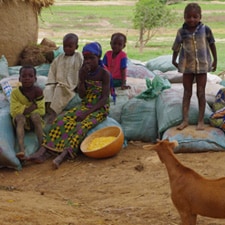
 Children in Zamfara sit atop bags of lead-contaminated soil, which were removed from their village during cleanupHowever, a few months later in May 2010, public health officials learned that hundreds of children had become sick in northern Nigeria. Reports stated that the children suffered from vomiting, abdominal pain, headaches, and seizures. After becoming ill, many of these children had died. The cause was unknown, and such a large number of childhood deaths and illnesses concerned public health officials.

A team was sent to one of the villages to find out the cause of the children’s deaths. Team members came from the CDC-Nigeria office in Abuja, the Nigerian Federal Ministry of Health, the Nigerian Field Epidemiology and Laboratory Training Program, the World Health Organization, and Medecins Sans Frontieres (Doctors Without Borders). Dr. Lora Davis, a CDC Animal-Human Interface Officer in Nigeria, was one member of the team.

More…